Chelonus foersteri
author(Tobias 1999)
synonyms
body
shape♀ 2.7 mm, ♂ 2.85 mm. [T9]. ♂ 2.6 - 3.2 mm, ♀ 2.8-3.2mm [TL].
colorBody black [T9].
head
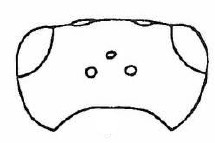
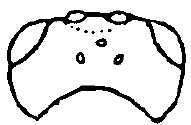
shapeHead roundly narrowing behind eyes; its width 1.7 times its length, 1.3 times its height, and 1.3 times mesonotum width. Temples slightly (1.15 x) longer than transverse eye diameter. Length of base of ocellar triangle equal to distance from posterior ocellus to eye plus ocellus diameter. Distance between posterior ocelli twice ocellus diameter. Longitudinal eye diameter 1.5 times transverse one, twice malar space, 0.77 times face width. Face height 0.55 times its width, 1.5 times clypeus height [T9]. ♂: head about temples narrower than about eyes, in frontal view 1.2 as broad as high, about as wide as mesosoma. Ocellar triangle almost as long as OOL. POL 4 times longer than OD. In frontal view eye 2.3 times as high as long, 1.5 times as long as malar space. Face 1.7 times as broad as high and 1.5 as broad as LD, twice higher than clypeus. Maxillary palpi as long as height of face. ♀: As for male except as follows. 1.3 times as wide as mesosoma. In frontal view eye twice as high as wide, about as wide as malar space. Maxillary palpi as long as height of face and clypeus combined [TL].
sculptureVertex and temples finely transversely striate, faintly shining. Face with fine concentric rugae. Clypeus weakly punctate, shining [T9]. Head densely and finely punctate. Face centrally with fine transverse strigosity and a longitudinal about eyes, weakly shining. Vertex partially finely transversely striate. Temple finely longitudinally [?] striate. Clypeus finely punctate, shining. ♀ Face without clear longitudinal-converse strigosity [TL]. The head is finely transversely striated behind the ocelli, the face with fine concentric rugae [T14].
colorPalpi dark-brown
antenna
shape ♀3rd antennal segment 3 times, 9th twice as long as wide [apical segments lost; judging from the name given to the species by Foerster [tenuicornis], they must be narrow and long] [T9]. Antennae with 16 segments, as long as head and mesosoma combined; scape widened, about twice as wide as flagellum, 2.5 times as long as wide; apical segments a little longer than wide [TL].
shape ♂Antennae 20-segmented [T9]. Antennae with 22-23 segments, as body length; scape 1.5 times as wide as flagellum, 3 times as long as wide; 3rd segment 3 times as long as wide, apical segments twice as long as wide [TL].
color
mesosoma
shapeMesosoma length 1.55 times its height. Propodeum without transverse carina, with small blunt lateral processes and median depression running along nearly its entire length [T9]. Mesosoma 1.6 times as long as high. ♂ Propodeum with two longitudinal carinas and a pair of small lateral tubercles. Two medial longitudinal carinas well developed forming a central keel, at transverse carina looking as two small teeth ♀: Propodeum with pair of obtuse and small lateral tubercles, but without transverse carina. Propodeum with less developed medial longitudinal carinas and a keel between them [TL]. Mesosoma length almost 1.5 times its height. Propodeum without transverse carina, with small obtuse lateral teeth [T14].
sculptureMesosoma finely rugose-punctate, dull [T9]. Mesonotum punctate. Scutum densely punctate without longitudinal strigosity, Sides of mesonotum roughly punctate with very weak rugosity. ♂ Scutellum weakly puctate, centrally largely smoother and shining. Propodeum roughly punctate with weak longitudinal elements. ♀ Scutellum punctate. Propodeum areolate-rugose. [TL]. The mesosoma is finely wrinkled and punctate [T14].
color
legs
shapeHind tarsus as long as hind tibia. Inner spur of hind tibia 1/3 as long as hind metatarsus. 5th segment of hind tarsus as long as 2nd, considerably longer than 3rd [T9]. Hind femur almost 4 times as long as broad. ♂ Outer and inner spurs of hind tibiae equal in length, a little longer that 1/2 of hind metatars. 5th segment as long as 3rd and 1.3 times shorter than 2nd. ♀ Outer and inner spurs of hind tibiae almost equal in length, not longer than 1/2 of 1st metatarsal segment, 5th segment as long as 3rd and 1.3 times shorter than 2nd [TL]. Hind femur 3.5 times as long as wide. Hind tibia equal to length of hind tarsus [T14].
sculpture
colorLegs brown, fore femur and tibia yellowish brown [T9]. Coxae dark, almost black; fore femora brown with yellowish apex, tibiae yellowish, tarsi yellowish with brown apex; hind femora dark-brown; tibiae yellowish with brown apex; tarsi brown [TL]. Legs brown, but fore femora and tibiae yellowish brown. Hind tibia entirely dark-colored [T14]
wings
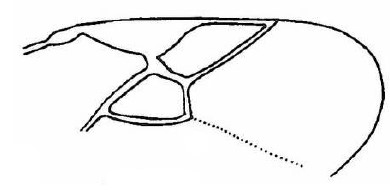
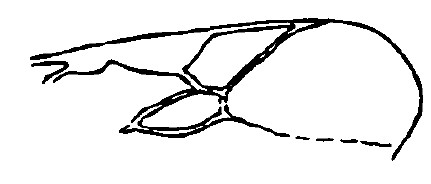
shape♀:1-R1 0.66 times as long as pterostigma. Marginal cell 1.5 times as large as 2nd submarginal cell. SR1 3 times as long as 3-SR, 1.7 times as long as 2-SR. r very short; therefore, 2nd submarginal cell almost sessile. cu-a length slightly exceeding 1-CU1.
♂: vein r short but distinct, about 0.33 times as long as 3-SR. 1-R1 0.58 times as long as pterostigma, 3-SR 0.37 times as long as SR1 [T9]. ♂ Length of 1-R1 a little shorter (0.85x) than length of pterostigma. Cell Sm2 comparatively big and elongate, 1.3 times smaller than cell M. 3-SR almost as long as r (in smaller specimens r shorter than 3-SR), 3.5 times shorter than SR1. 1-CU1 shorter than cu-a. ♀ Cell Sm2 moderately big (1.3-1.5 times smaller than cell M), 3-SR shorter than r and 3 times shorter than SRI. [TL]. 1-R1 0.67 times as long as the pterostigma [T14].
♂: vein r short but distinct, about 0.33 times as long as 3-SR. 1-R1 0.58 times as long as pterostigma, 3-SR 0.37 times as long as SR1 [T9]. ♂ Length of 1-R1 a little shorter (0.85x) than length of pterostigma. Cell Sm2 comparatively big and elongate, 1.3 times smaller than cell M. 3-SR almost as long as r (in smaller specimens r shorter than 3-SR), 3.5 times shorter than SR1. 1-CU1 shorter than cu-a. ♀ Cell Sm2 moderately big (1.3-1.5 times smaller than cell M), 3-SR shorter than r and 3 times shorter than SRI. [TL]. 1-R1 0.67 times as long as the pterostigma [T14].
colorWings faintly infuscate, with light brown veins [T9]. Wings weakly infuscate. Fore wings: pterostigma brown, basal veins yellow. Forewings of small specimens vary in term of coloring: pterostigma brown-yellowish, almost all veins yellow and comparatively transparent [TL]. The wings are slightly darkened [T14].
metasoma
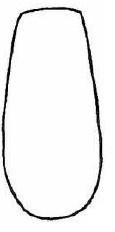
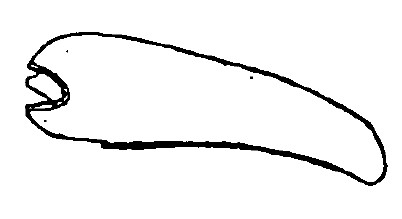
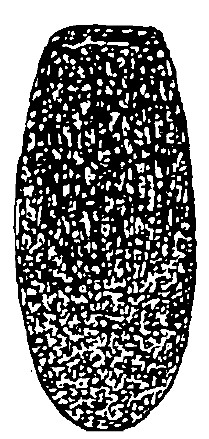
shapeMetasomal carapace widening to apical third, bent downward apically along 0.15 of its length, 2.1 times as long as wide, 3.5 times as long as high. ♂ Metasoma 2.4 times as long as wide, less widened apically than in female [T9]. Carapace elongate, gradually enlarged to apex, 2.25-2.45 as long as maximal broad. In lateral view weakly incurved, about 1.5 times as high posteriorly as anteriorly. ♀ shape of carapace with the broadest part in the middle [TL].
sculptureMetasoma with non-coarse longitudinal rugae extending as far as its posterior third [T9][T14]. Carapace with weak longitudinal winding undulations on its 1/2, apex without longitudinal elements of sculpture [TL]
color
♀ ovipositorOvipositor slender, its protruding part as long as the two basal segments of hind tarsus combined [T9]. Ovipositor short [TL]. Ovipositor sheaths equal to the length of the 1st and 2nd segments of the hind tarsus combined [T14].
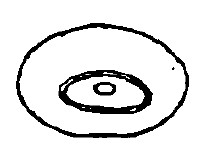
♂ apertureAperture occupying about half width of carapace, oval, 2.3 times as wide as high. Dorsal surface of posterior margin of carapace markedly protruding above opening; median process of opening occupying 1/3 of its height, its length twice its height. [T9]. In back view aperture oval or bean-formed, 0.5 times as broad as carapace, about 0.3 height of carapace; in lateral view about 0.2 length of carapace [TL].
other info
distributionCentral and Southwest Europe (Austria, Czech Republic, Romania) [TL]. DE, CZ [FE].
remarksM. foersteri sp. n. differs from most of Microchelonus species in the extremely shortened vein r and the nearly sessile 2nd submarginal. In addition, its clear distinction is the strongly elongated and apically widened metasoma [T9] Although the nominal species description (TOBIAS 1999) indicates on extremely short r, the investigated series (20 males) have almost equaled 3-SR to r. Nevertheless, this character runs to shortening in case of specimens with smaller body, but not too short: r 1.3-1.5 times shorter than 3-SR [TL].
hosts